
Introduction
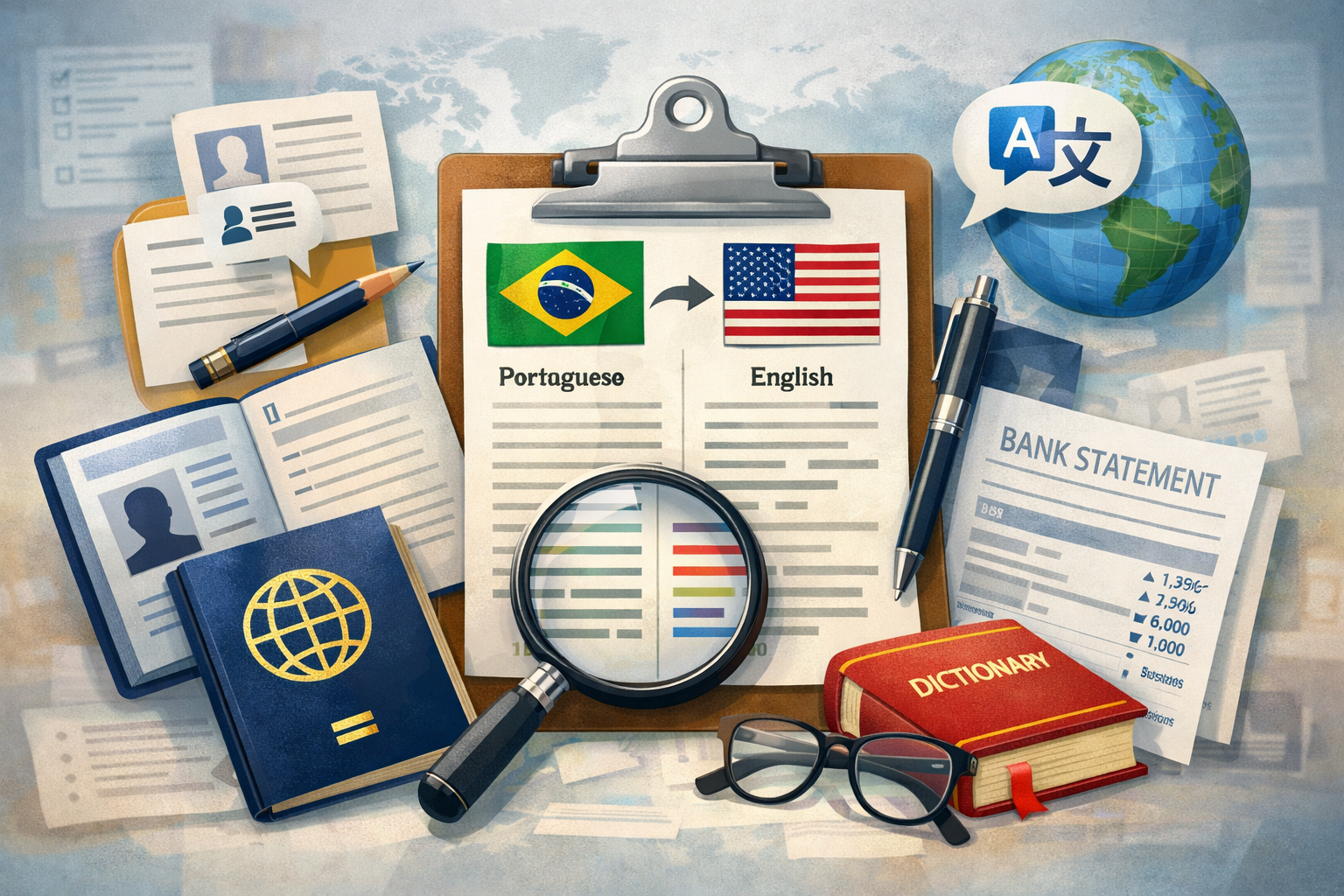
Think translating personal documents like passports and bank statements from Portuguese to English translation is a daunting, error-prone process? Think again. Most people believe that accuracy in translation is all about knowing both languages fluently—but that’s only half the story. The truth is, the key to flawless translation lies in understanding the specific standards and nuances required for official documents, not just the words themselves.
In this blog, we’ll debunk common myths about personal document translation and share actionable tips that will save you time, money, and stress. Whether you’re preparing for immigration, applying for international opportunities, or simply organizing your affairs, these insights will change the way you approach translation forever. Curious? Let’s dive in.

1. Understand the Context and Purpose
Different types of personal documents require varying levels of detail. For instance:
- Passports: Focus on correctly translating names, dates, and places of issue without altering official formatting.
- Bank Statements: Accurately translate financial terms, balances, and transactional details while maintaining confidentiality.
When submitting these documents to institutions like IRCC, it’s crucial to align your translations with the specific requirements they outline.

2. Partner with Certified Translators
Not all translations are created equal. Certified translation services, particularly those accredited by organizations like AITO (Association of Interpreters and Translators Ontario), provide the expertise and credibility required for official submissions. Certification ensures that your translations are accurate, complete, and legally valid.
3. Maintain Document Formatting
Official documents often have a structured layout that must be mirrored in translations. For example:
- Use tables for bank statement summaries.
- Replicate headings, signatures, and stamps on passports.
Preserving the original format ensures that the translated document is as close to the original as possible, reducing the risk of rejection.
4. Avoid Literal Translations
Word-for-word translation can lead to misinterpretations. For example, financial terms or administrative language in Brazilian Portuguese may not have direct equivalents in English. Skilled translators know how to adapt these terms without losing meaning or legal accuracy.
5. Check Local Requirements
When submitting documents for Canadian immigration, IRCC may have unique standards. Double-check whether notarization or additional certification is required for translations to be accepted.
6. Leverage Specialized Tools and Resources
Professional translators often use industry-standard tools to ensure accuracy and consistency. Tools like glossaries and translation memory systems are especially useful for complex documents.
Conclusion
The process of translating personal documents like passports and bank statements from Portuguese (BZ) to English doesn’t have to be overwhelming. By understanding the context, choosing certified translators like AITO-accredited professionals, and adhering to official formatting requirements, you can ensure that your translations meet the rigorous standards of institutions like IRCC in Canada.
Looking for reliable Portuguese (BZ) to English translation services? Our experts specialize in document translation from Portuguese (BZ) to English, ensuring accuracy and compliance for all your official needs. Reach out today to streamline your journey with stress-free, precise translations.


