Introduction
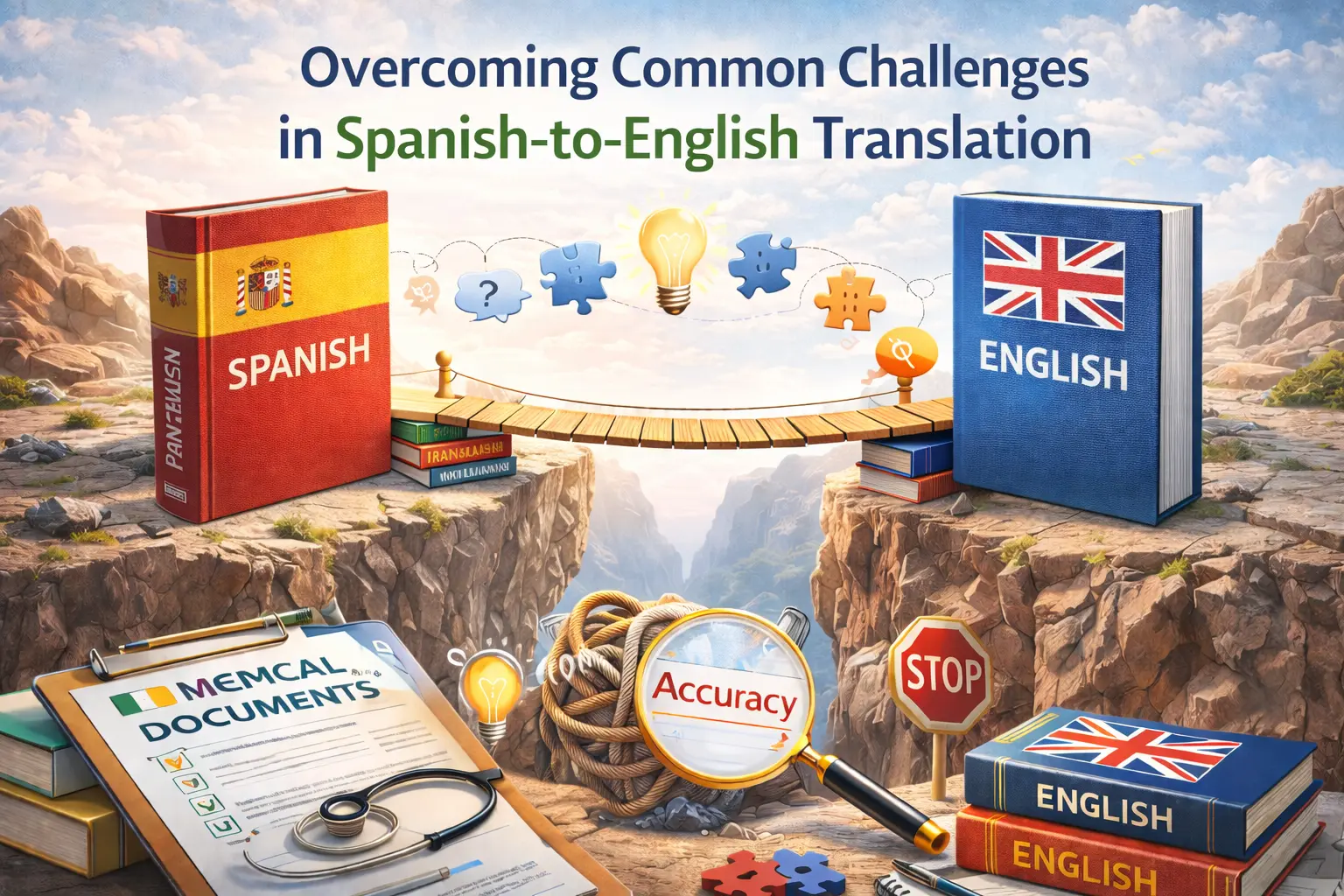
Language is the bridge that connects cultures, businesses, and individuals. Yet, even in an age of advanced technology and global connectivity, Spanish-to-English translation often presents unique challenges. From grammatical complexities to cultural nuances, getting it right requires expertise and attention to detail.
This topic has become even more relevant today as industries worldwide navigate cross-cultural collaboration on an unprecedented scale. A prime example? The recent surge in international collaborations on sustainable initiatives, where accurate communication is paramount. As Spanish-speaking countries play a leading role in global sustainability discussions—such as at COP29—ensuring the precise translation of policies, agreements, and reports has become essential for progress.
In this blog, we’ll explore the most common challenges translators face, including linguistic intricacies, cultural differences, and industry-specific terminology, while offering practical strategies to overcome them. Whether you’re a business owner, content creator, or aspiring translator, this post will equip you with the insights to achieve clarity and accuracy in Spanish-to-English translation.

1. Grammatical Differences
Spanish and English have distinct grammatical structures. For instance, Spanish nouns are gendered (masculine or feminine), whereas English nouns are not. Translators must accurately convey meaning without overcomplicating the translation.
Solution
Deep knowledge of both languages’ grammatical rules is essential. Translators should focus on conveying the intended meaning rather than rigidly adhering to the source structure.
2. Vocabulary Nuances and Regional Variations
Spanish is spoken in over 20 countries, each with its unique dialect and regional vocabulary. For example, the word “car” can be translated as “coche”, “carro”, or “auto”, depending on the country.
Solution
Understanding the target audience is key. Translators should identify the specific Spanish-speaking region they’re addressing and adjust their vocabulary accordingly.
3. Cultural Context and Idiomatic Expressions
Direct translations of idiomatic expressions often fail to capture the intended meaning. For example, the Spanish idiom “estar en las nubes” translates literally to “being in the clouds”, but its meaning in English is closer to “daydreaming.”

Solution
Translators should interpret idioms based on cultural context and find equivalent expressions in English that convey the same sentiment.
4. Maintaining Tone and Formality
Spanish often uses formal pronouns and verb conjugations (usted, ustedes) to convey respect. English lacks such formal pronouns, making it challenging to preserve the original tone.
Solution
Translators should consider the context and audience to decide on the appropriate level of formality in the English translation.
5. Industry-Specific Terminology
Fields like law, medicine, and technology use specialized jargon that may not have direct equivalents in the target language.
Solution
Professional translators often rely on glossaries, industry-specific training, and collaboration with subject-matter experts to ensure accurate translations.
Why Professional Translation Services Matter
While AI-powered tools can assist with basic translations, they often fall short in addressing the nuances of grammar, culture, and industry-specific language. Professional Spanish document translation services bring the human expertise necessary to overcome these challenges and deliver polished, accurate results.
Conclusion
Overcoming the common challenges in document translation from Spanish to English requires a blend of linguistic skills, cultural understanding, and industry knowledge. Whether you’re dealing with business contracts, immigration documents, or creative content, accuracy is non-negotiable.
By partnering with professional Spanish document translation services, you can ensure your message is conveyed clearly, respectfully, and in compliance with cultural and legal standards. Choose expertise to break language barriers and achieve seamless communication.