
Introduction
As a young interpreter fresh out of training, I found myself sitting in a bustling café in Kyiv, nervously translating for a visiting English journalist. The conversation was smooth until our Ukrainian host leaned back with a smile and said, “Заговорив, як Сірко на верблюді”—literally, “He speaks like Sirko on a camel.” The journalist looked puzzled, and so did I. Sirko? A camel? In a country without deserts? My mind raced.
What followed was an awkward explanation that, while technically correct, completely missed the essence of the idiom—a humorous jab at someone speaking out of turn or beyond their expertise. It was a moment of realization: idioms are more than words; they’re a reflection of culture, humor, and context. And translating them is anything but straightforward.
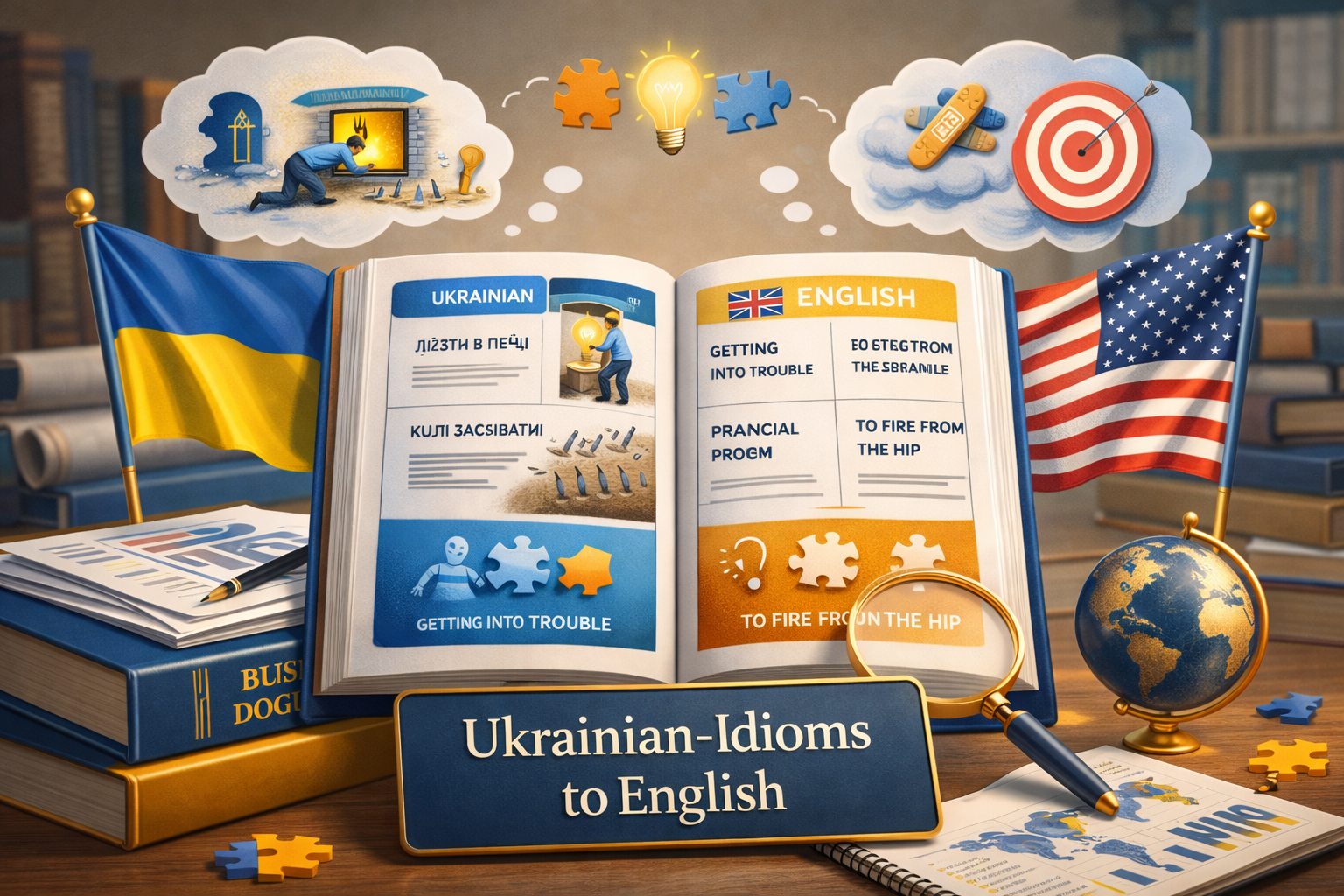
This experience set the stage for my deep dive into the fascinating yet intricate world of idiomatic translation. In this post, we’ll explore the unique challenges of translating Ukrainian idioms into English and discover creative solutions that bridge the cultural divide without losing the essence of these colorful expressions.

The Unique Challenges of Translating Ukrainian Idioms1. Cultural Context
Many Ukrainian idioms are deeply rooted in cultural or historical contexts that may be unfamiliar to English-speaking audiences. For example, the idiom “Вовків боятися — в ліс не ходити” (“If you’re afraid of wolves, don’t go into the forest”) reflects Ukraine’s natural landscape and folklore but may not resonate with an English reader without additional explanation.

2. Non-Literal Meaning
Idioms are often metaphorical, and a word-for-word translation can lead to confusion or misinterpretation. Consider “Як мокра курка” (“Like a wet chicken”), which describes someone looking defeated or dejected. Directly translated, the imagery may amuse rather than inform.
3. Lack of Exact Equivalents
Many Ukrainian idioms have no direct English counterpart. For instance, “Де тонко, там і рветься” (“Where it is thin, there it breaks”) implies vulnerability or weak points in a system, but finding an equally concise English equivalent can be tricky.
Effective Solutions for Translating Ukrainian Idioms1. Using Equivalent Idioms
One effective approach is substituting the Ukrainian idiom with an English equivalent that conveys a similar meaning. For instance, “Захопивши бика за роги” can be translated as “Taking the bull by the horns,” aligning with the metaphor while maintaining cultural relevance.
2. Paraphrasing
If no direct equivalent exists, paraphrasing can help convey the idiom’s essence. For “Як риба у воді” (“Like a fish in water”), a paraphrase such as “feeling at ease” can effectively communicate the intended meaning.
3. Adding Explanatory Notes
In some contexts, especially formal or literary translations, an explanatory note may be necessary to preserve the cultural richness of an idiom. This approach is particularly useful for translations intended for readers who want a deeper understanding of Ukrainian culture.
4. Collaboration with Cultural Experts
Translators often collaborate with native speakers or cultural experts to ensure accuracy and appropriateness. This collaboration is crucial when translating idioms in legal, immigration, or official documents where precision is paramount.
Why Idiomatic Translation Matters
Idioms are more than just linguistic expressions; they provide a glimpse into a community’s way of life. For individuals navigating immigration processes, such as those involving IRCC (Immigration, Refugees and Citizenship Canada), idiomatic accuracy in translated documents is essential to avoid misunderstandings.
Conclusion
Translating Ukrainian idioms into English requires not only linguistic skill but also cultural sensitivity and creativity. Whether you’re working on personal documents or literary pieces, understanding the challenges and applying thoughtful solutions can bridge the gap between languages and cultures.
For those seeking reliable document translation from Ukrainian to English or Ukrainian document translation services—particularly for immigration purposes to countries like Canada—turning to AITO-certified translators ensures both precision and cultural fidelity. Accurate translations are vital, especially when dealing with IRCC requirements, to make your immigration journey seamless and stress-free.


